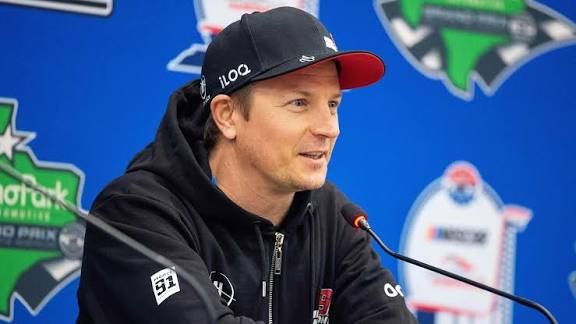

For most fans, Kimi Räikkönen has always been the unshakable “Iceman” — a driver who never raised his voice, never showed panic, and never seemed bothered by the chaos around him. But behind the calm stare hidden beneath his helmet, there existed a rivalry so deep, so political, and so suffocating that it almost broke the man who millions believed was unbreakable.
This wasn’t the loud kind of rivalry.
This wasn’t wheel-to-wheel hatred.
This was the silent war that happens behind closed doors — in meeting rooms, in contract negotiations, in radio calls coded with tension, and in the small decisions that slowly crush a driver without ever touching the car.
It happened during a time when Kimi was still one of the fastest men on the grid, still delivering when the car allowed him to, still capable of magic. But inside the team, something began to shift. Younger stars were rising. Marketing departments wanted faces that talked more. Sponsors wanted smiles, drama, interviews. And Kimi — who preferred racing over politics — became the easy target.
The rivalry wasn’t really about another driver being faster.
It was about another driver being easier for the team to control.
Kimi felt the balance changing: the strategy choices that suddenly didn’t favor him, the development updates that somehow went to the other car first, the subtle pressure that whispered, “Your time is ending.” He didn’t complain. He never does. But the silence around him grew heavier every weekend.
Inside certain meetings, decisions were made that pushed him into a corner — not because he was slow, but because he wasn’t the “team product” they wanted. And in the middle of all of it stood his rival, a driver backed by politics, PR support, and corporate influence. Someone who played the game perfectly. Someone who fit the mold Kimi refused to become.
The engineers knew it.
The mechanics whispered about it.
The fans sensed it.
But Kimi simply kept driving, trying to outrun the politics with raw speed.
There was one season — fans still debate which one — where Kimi’s frustration was almost visible. The radio messages grew shorter. His face looked colder than ever. And even though he delivered results, his rival’s shadow kept growing, fueled not by talent alone, but by the inner machinery of the team.
What hurt Kimi wasn’t losing.
It was being treated like someone who no longer mattered.
But here’s where the story shifts.
Instead of breaking, Kimi responded the only way he knew how: by staying true to himself. He refused to become something he wasn’t. He didn’t play the media game. He didn’t spark drama. He stayed honest, silent, and incredibly fast — a combination that eventually forced the world to respect him even more.
His rival? He won some battles.
But Kimi won something much bigger:
The love of fans who saw through the politics and recognized the purity of a man who simply wanted to race.
Years later, even team insiders admit that the internal rivalry and political imbalance were unfair. Many say Kimi deserved more support. Some even say he could have been a multiple-time world champion if not for the politics that swirled around him.
But the Iceman never complained.
He never exposed anyone.
He never told the full story.
Because the truth is simple — Kimi Räikkönen was built for racing, not politics.
And even when the rivalry almost broke him, he survived it with dignity, silence, and speed. That’s why his legacy remains stronger than his rival’s. That’s why millions still call him the most authentic driver Formula One has ever seen.
And that’s why, even today, the world knows:
Kimi Räikkönen didn’t lose that political war.
He simply rose above it.