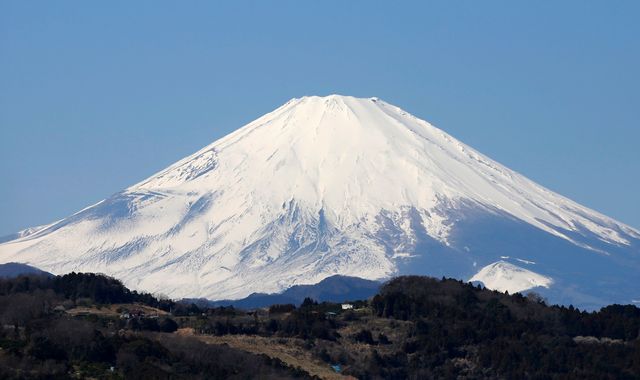
Japan’s iconic Mount Fuji, known for its picturesque snowcap in the winter, has yet to receive its first snowfall of the season—a rare occurrence that has set a new record for the latest first snow on the summit. As of October, forecasters report that Mount Fuji’s peak, which typically shows signs of snow by mid-September or early October, remains bare. This delay has caused concern among meteorologists and raised questions about changing climate patterns in Japan and beyond.
The Japan Meteorological Agency (JMA) tracks the first snowfall on Mount Fuji each year, marking it as an important seasonal milestone. According to JMA, the previous record for the latest first snow was set on October 20 in 2016. However, this year’s delay has surpassed that date, with no signs of snow as of late October.
The absence of snow is unusual given Mount Fuji’s altitude of 3,776 meters (12,389 feet), where temperatures typically drop early in the season. This year, however, temperatures have been slightly higher than usual, attributed partly to a warmer autumn across Japan. The delayed snow is not only a concern for local tourism, as visitors flock to view the iconic snowcapped peak, but also a sign that climate variations are impacting even Japan’s tallest mountain.
Experts suggest that while individual weather events cannot solely be attributed to climate change, the trend of warmer autumns may be linked to larger patterns of global warming. The prolonged wait for Mount Fuji’s first snowfall adds to the growing list of unusual weather occurrences worldwide, signaling a need for closer attention to climate conditions.
As winter approaches, forecasters continue to monitor Mount Fuji, hoping the snow arrives soon. The delay serves as a reminder of how changing climates are affecting even the most consistent natural events, transforming landscapes and impacting seasonal rhythms across the globe.