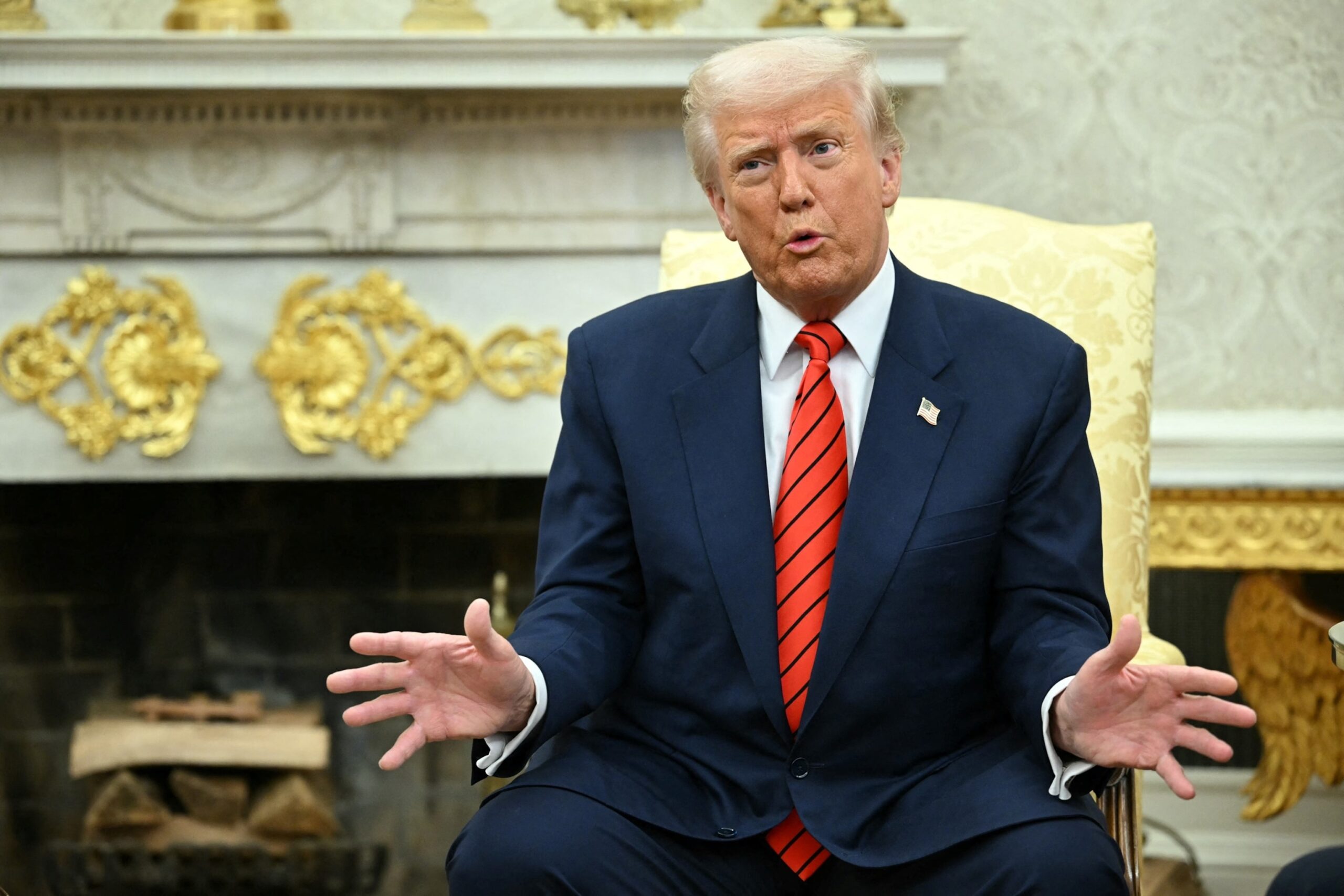
As global stock markets continue to reel from escalating trade tensions, President Donald Trump remains firm on his administration’s tariff policies, urging Americans and investors alike to “be patient” during this period of economic uncertainty.
Over the past week, markets around the world have experienced sharp declines, with the Dow Jones Industrial Average and other major indices posting significant losses. Analysts and investors point to the ongoing trade war between the United States and China as a key driver of the turbulence. Tariffs imposed by both nations have triggered fears of slowing global growth, disrupted supply chains, and increased costs for businesses and consumers.
Despite the market volatility, President Trump has shown no signs of backing down. Speaking from the White House, he emphasized that short-term economic pain is necessary to achieve long-term gains. “I know the markets are reacting, but this is something that should have been done years ago,” Trump stated. “We’re finally standing up to China’s unfair trade practices, and that takes strength and time. Be patient—it will be worth it.”
The president’s remarks come after a fresh round of tariff announcements. The U.S. has raised duties on billions of dollars’ worth of Chinese goods, while China responded with retaliatory tariffs on American products including agricultural goods, cars, and chemicals. The tit-for-tat measures have injected uncertainty into the global economy, sparking selloffs in both Asian and European markets.
In his defense of the policy, Trump framed the tariffs as a tool for economic justice. “For too long, China has taken advantage of our country,” he said. “These tariffs are about leveling the playing field and protecting American jobs and industries.” He added that he remains hopeful for a resolution but stressed that the U.S. will not settle for a “bad deal.”
Economists and business leaders are divided on the impact of the trade war. Some support the president’s stance, arguing that aggressive tactics are needed to force China to reform its trade practices, including issues around intellectual property and forced technology transfers. Others warn that prolonged trade tensions could drag down economic growth and hurt consumers through higher prices.
The uncertainty has also rattled investors. Major corporations have already begun reporting concerns about rising costs and disrupted operations. Meanwhile, farmers and manufacturers are facing growing financial pressure as export markets shrink and input costs rise.
Despite the criticism, President Trump remains confident that his approach will ultimately strengthen the U.S. economy. “We’re playing the long game,” he said. “And in the end, America will come out stronger.”
As negotiations between the U.S. and China continue behind closed doors, all eyes remain on Washington and Beijing. Investors and citizens alike are watching closely to see whether patience will pay off—or if market jitters are just the beginning of deeper economic challenges.