
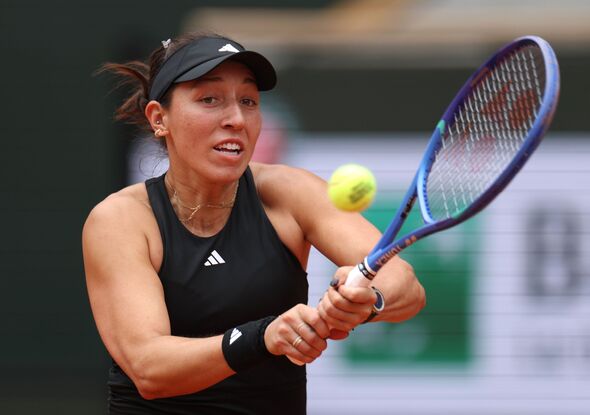

For a player as consistent and composed as Jessica Pegula, the frustration she showed after her Miami Open exit hit fans harder than usual.
Not because the loss itself was shocking — losing a tight, high-level battle to Elena Rybakina is hardly a collapse — but because it felt like one of those matches that should have gone her way. Pegula took the first set, created chances, and still walked away empty-handed in a 2-6, 6-3, 6-4 quarterfinal defeat that left both her and her supporters with the same lingering feeling: that one got away. (The Guardian)
That emotional edge is exactly why fans are so invested in what happens next.
Because this is no longer just about one frustrating afternoon in Miami. It is about whether Pegula can turn another painful near-miss into the kind of response that defines a serious season.
And in many ways, the next chapter starts now.
What made the Miami loss sting so much was not simply the scoreboard. It was the pattern. Pegula has played some excellent tennis in 2026, but when the biggest tests have arrived against the very top power players, especially Rybakina, the margins have continued to feel cruelly small. The match in Miami was another reminder that Pegula is close — painfully close — to pushing through that ceiling, but “close” is a word top players eventually grow tired of hearing. (The Guardian)
Fans felt that immediately.
Across tennis discussion spaces, the reaction was not anger so much as heartbreak and sympathy. Many supporters pointed to how well Pegula actually played, how competitive she remained, and how brutal it feels that some of her best efforts keep ending against the same elite names. Others focused on the bigger picture: the fear that Pegula is doing almost everything right, yet still finding herself on the wrong side of the matches that matter most. (Reddit)
That is what makes this moment emotionally charged.
Because Pegula is one of those players fans genuinely want to see break through. She is respected, admired, and seen as one of the most reliable competitors on tour. There is no drama-for-drama’s-sake around her. No chaos. No empty hype. Just high-level tennis, week after week, and a quiet determination that has made her easy to root for.
Which is why the frustration in Miami felt so human.
It exposed the part of elite sport that stats cannot fully capture: how exhausting it can be to keep knocking on the same door without being allowed through.
But if there is one reason this moment may end up helping Pegula more than hurting her, it is timing.
The clay swing now arrives with a huge opportunity attached to it.
Pegula heads to Charleston not as someone trying to rebuild from scratch, but as the defending champion and one of the tournament’s central names. She has already spoken about needing a reset and admitted she “didn’t feel like myself” heading into this stretch, which only adds more intrigue to what comes next. That honesty has made fans even more emotionally invested, because it suggests there is both pressure and possibility wrapped into the next few weeks. (Tennisuptodate.com)
And Charleston is not just another stop on the calendar.
It is the kind of event that can shift the emotional temperature of a season.
A strong title defense would not erase Miami, but it would completely change the conversation around it. Suddenly, the frustration becomes fuel. The disappointment becomes part of a bounce-back narrative. And Pegula, once again, looks like a player whose resilience matters just as much as her results.
That is why this next stretch feels so important.
Not because her season is in danger — far from it — but because this is the moment where her 2026 campaign can either stay in the “very good” category or push toward something much more memorable.
Fans are not just watching to see if she wins matches.
They are watching to see how she responds emotionally.
Can she take the sting of Miami and channel it into something sharper?
Can she avoid carrying that frustration into the clay season?
Can she turn another almost-moment into a statement?
Those are the questions that now follow her.
And in truth, they are the kinds of questions that often shape careers.
Jessica Pegula has already proven she belongs among the best players in the world. That is not the debate anymore. The real question now is whether 2026 becomes the year she starts turning emotional setbacks into defining momentum.
If she does, fans may one day look back at Miami not as the match that hurt her season — but as the one that toughened it.
And if that happens, then the frustration fans saw in Miami will not be remembered as weakness at all.
It will be remembered as the beginning of something bigger.