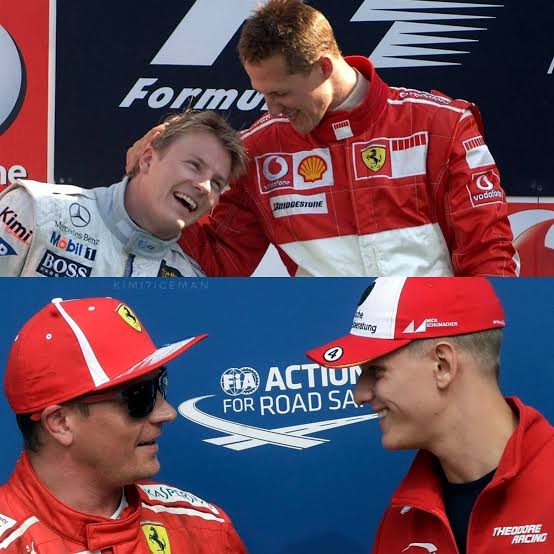

Formula 1 fans are once again locked in fierce debate after explosive comments attributed to Stefano Domenicali reignited one of the sport’s most sensitive comparisons. The discussion centers on two Ferrari legends — Kimi Räikkönen and Michael Schumacher — and the provocative suggestion that Räikkönen may have possessed greater natural talent.
Few figures are better placed to weigh in on this debate than Domenicali. Having worked closely within Ferrari during both Schumacher’s dominant era and Räikkönen’s championship-winning season in 2007, he witnessed firsthand the contrasting styles that defined each driver’s success.
Michael Schumacher’s legacy at Ferrari is monumental. Five consecutive world titles with the Scuderia transformed the team into an era-defining powerhouse. Schumacher was renowned not only for his speed but for his relentless work ethic, technical precision, and ability to build an empire around him. He immersed himself in development, strategy, fitness, and leadership. His dominance was engineered as much as it was driven.
Kimi Räikkönen, on the other hand, brought a very different energy when he joined Ferrari in 2007. Quiet, instinctive, and famously detached from politics and media theatrics, Räikkönen relied heavily on natural feel and raw car control. In his very first season with the team, he clinched the World Championship in dramatic fashion, delivering Ferrari a title many believed would remain in Schumacher’s shadow.
The idea that Räikkönen may have been “more naturally gifted” does not diminish Schumacher’s accomplishments — but it reframes the conversation. Natural talent in Formula 1 often refers to instinctive speed, effortless adaptability, and an almost intuitive understanding of grip and balance. Many engineers who worked with Räikkönen have spoken about his remarkable ability to extract pace without overcomplicating feedback.
Schumacher’s brilliance, however, extended beyond raw speed. He constructed dominance through preparation, discipline, and strategic mastery. Where Räikkönen was cold and instinctive, Schumacher was calculated and methodical. One seemed born to drive at the limit; the other built systems to control it.
The renewed comparison has divided fans across the motorsport world. Supporters of Schumacher argue that sustained dominance across multiple seasons is the ultimate proof of greatness. Räikkönen’s admirers counter that pure driving ability cannot always be measured by title counts alone — especially in a sport where machinery and team structure play decisive roles.
At the heart of this debate lies a timeless Formula 1 question: what defines greatness? Is it natural flair behind the wheel, or the ability to engineer an entire era of success? In truth, both drivers embodied different versions of excellence.
Räikkönen’s 2007 championship remains one of the most dramatic in history. Schumacher’s Ferrari dynasty remains one of the most dominant. Comparing them will always stir emotion, especially among Ferrari loyalists who witnessed both eras unfold.
Cold versus calculated. Instinct versus construction. However the debate unfolds, one fact remains undeniable — both Kimi Räikkönen and Michael Schumacher carved their names into Formula 1 history, and their legacies continue to fuel conversations long after their peak racing days.