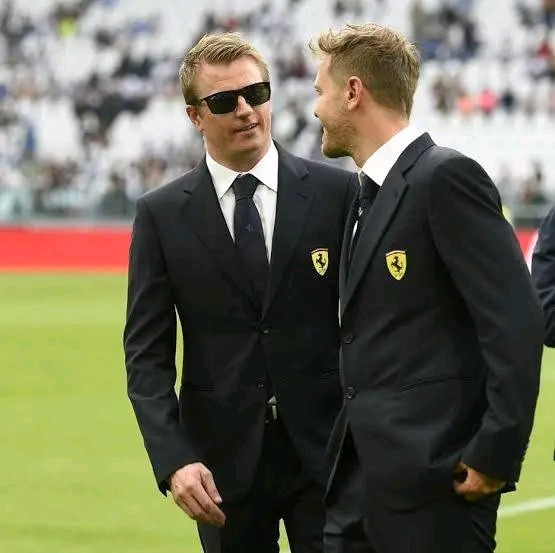

In a moment that sent waves of admiration across the motorsport world, the Fédération Internationale de l’Automobile (FIA) has officially honoured Kimi Räikkönen with its prestigious Lifetime Achievement Award, recognizing not only his accomplishments on track but also his lasting impact on Formula 1 and global racing culture.
The announcement was met with widespread applause from drivers, team principals, and fans alike, as one of the sport’s most iconic and enigmatic figures received recognition befitting a remarkable career that spanned more than two decades.
Räikkönen, famously nicknamed “The Iceman” for his unshakable composure behind the wheel, built a legacy defined by raw speed, authenticity, and an unwavering commitment to racing on his own terms. From his debut in 2001 with Sauber to his unforgettable 2007 World Championship victory with Ferrari, Kimi carved out a path that was uniquely his.
The FIA cited his “exceptional sportsmanship, dedication to fair competition, and enduring influence on the spirit of Formula 1” as key reasons for the honour.
Over the course of 349 Grand Prix starts, Räikkönen amassed 21 wins, 103 podium finishes, and countless moments that became part of Formula 1 folklore. His championship-winning 2007 season remains one of the most dramatic in the sport’s history, clinched by a single point in a stunning finale.
Yet statistics alone do not capture his influence.
Kimi’s straightforward personality and refusal to conform to media expectations made him one of the most beloved figures in modern motorsport. His legendary radio messages, understated interviews, and no-nonsense attitude resonated with fans who admired his authenticity in an increasingly commercialized era.
Former rivals have often spoken about his clean racing style and respect for competitors. Despite fierce battles on track, Räikkönen maintained a reputation for fairness and professionalism — qualities the FIA highlighted in its tribute.
Beyond victories and podiums, Räikkönen’s influence extended to shaping a generation of drivers who admired his independence and mental resilience. He stepped away from Formula 1 at the height of his career, competed in rallying and NASCAR, then returned to the grid — proving that passion, not pressure, guided his decisions.
His longevity in the sport also demonstrated remarkable physical and mental endurance. Competing across different eras of F1 — from V10 engines to hybrid power units — he adapted while maintaining the same cool presence that defined his nickname.
The FIA described him as “a driver who embodied the purity of racing, inspiring millions while remaining true to himself.”
Though known for his reserved demeanor, Räikkönen reportedly expressed gratitude for the honour, thanking his teams, family, and fans for supporting him throughout his journey.
“I was lucky to race in this sport for so long,” he said. “There were good days and tough days, but I always enjoyed driving.”
True to form, his remarks were brief — but the sentiment was clear.
Tributes poured in from across the racing community. Former teammates praised his loyalty and technical insight. Rival drivers acknowledged the respect he commanded in wheel-to-wheel battles. Fans flooded social media with memories of iconic overtakes, championship celebrations, and classic “Iceman” moments that defined an era.
The FIA Lifetime Achievement Award cements Räikkönen’s place among the legends of Formula 1. More than just a world champion, he became a cultural icon — proof that individuality can thrive even in one of the most demanding sports in the world.
In an age where drivers are often carefully curated public figures, Kimi Räikkönen stood apart. He didn’t chase headlines. He didn’t change for the spotlight. He simply raced — fiercely, honestly, and brilliantly.
As the motorsport world reflects on his extraordinary journey, one thing is undeniable: The Iceman’s legacy is permanently etched into Formula 1 history.
And now, officially, it has been honoured at the highest level.