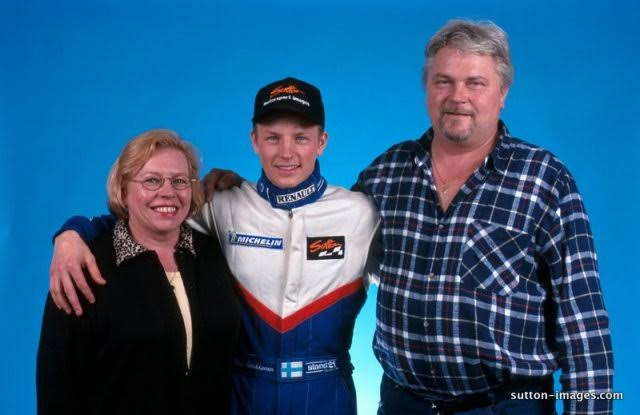
For most of his career, Kimi Räikkönen lived life at 300 kilometers per hour—on track and off it. Formula 1 schedules were relentless, expectations never eased, and privacy was a luxury rarely afforded to a world champion. So when Kimi finally stepped away from Formula 1, many fans wondered whether the sport had lost one of its purest racers too soon. But from the perspective of the person who has known him longest, the decision was not only timely—it was necessary.
According to his mother, Paula Räikkönen, Kimi’s break from Formula 1 was good for him.
Behind the image of the stoic “Iceman” was a son who had spent decades living under constant pressure. Paula has often described Kimi as someone who gives everything when he commits—but once the joy begins to fade, he knows when it is time to walk away. From her point of view, stepping back from Formula 1 allowed Kimi to reclaim parts of himself that had been set aside for years.
“Kimi never raced for fame,” those close to the family have said repeatedly. He raced because he loved driving. When the sport became more about obligations than passion, Paula recognized the toll it was taking. Endless travel, media demands, and the physical strain of elite competition had quietly accumulated. To her, his retirement was not an ending, but a release.
During his time away from F1, a noticeable change occurred. Kimi became more relaxed, more present, and more engaged in everyday life. For a man who had lived out of suitcases for most of his adult life, simply being home mattered. Paula saw her son reconnect with family, enjoy uninterrupted time with his children, and rediscover simple routines that racing never allowed.
From a mother’s perspective, these moments carried more weight than podium finishes. Formula 1 had given Kimi everything professionally, but it had also taken years he could never get back. His break gave him the freedom to be a father first, a husband, and simply Kimi—not a brand, not a headline.
Paula Räikkönen has also noted that stepping away helped protect his health. The physical demands of modern Formula 1 are immense, and the mental strain can be even heavier. Without the constant pressure to perform, Kimi’s mind finally had space to rest. That calm—something he always projected publicly—became real in his personal life.
Importantly, the break did not extinguish his competitive fire. Instead, it refined it. Kimi remained involved in motorsport on his own terms, choosing projects that aligned with his interests rather than obligations. That freedom, Paula believes, restored the joy that first drew him to racing as a young boy in Finland.
For fans, Kimi Räikkönen will always be remembered as a world champion and one of Formula 1’s most authentic personalities. For his mother, however, the most important legacy is simpler. She saw her son choose happiness over pressure, family over schedules, and peace over noise.
In her eyes, stepping away from Formula 1 was not a loss for Kimi Räikkönen. It was a victory—one measured not in trophies, but in well-being, balance, and a life finally lived at his own pace.