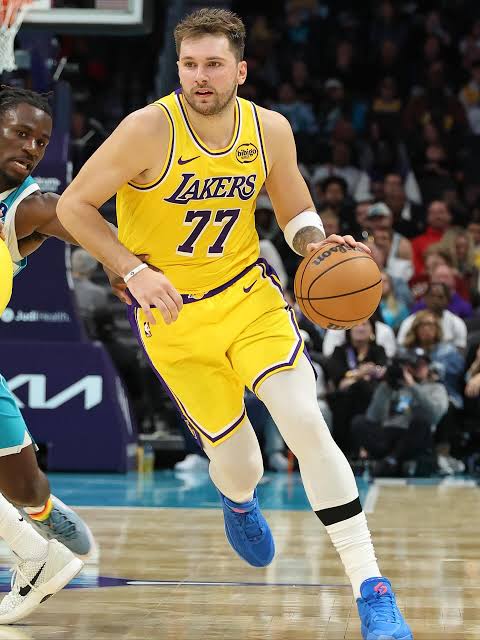
Luka Dončić is one of the most gifted basketball players of his generation. His numbers are historic, his highlights are viral, and his confidence is undeniable. But behind the MVP-level performances and jaw-dropping step-back threes lies a question many fans are starting to whisper — and others are afraid to say out loud.
Is Luka Dončić quietly becoming the most hated superstar in the NBA?
Not because of scandals. Not because of off-court controversy. But because of something far more dangerous in professional sports: how he makes people feel.

Dončić plays with swagger. With emotion. With visible fire. He complains to referees. He talks to opponents. He celebrates loudly. He flops sometimes. He gestures. He smirks. He doesn’t pretend to be humble in the traditional sense — and in today’s NBA, that alone can make a player a lightning rod for criticism.
Fans don’t just watch Luka. They react to him. Some love him with passion. Others dislike him just as strongly.
Opposing fan bases call him “annoying.”
Critics call him “immature.”
Opponents say he “whines too much.”
Even some analysts question his leadership style.
But here’s the uncomfortable truth:
The NBA has always been uncomfortable with players who are brilliant and unapologetic at the same time.
Luka dominates games while smiling, shrugging, and talking. He does it while looking like he’s enjoying himself a little too much. And that bothers people — because superstars are traditionally expected to look serious, corporate, polished, and controlled.
Luka is none of that.
He’s raw emotion. He’s fire. He’s authenticity.
And that authenticity is exactly what makes him polarizing.
Some fans hate that he talks to referees constantly.
Some hate the dramatic reactions.
Some hate how easily he manipulates defenses and draws fouls.
Some hate that he looks like he’s playing a video game while their favorite team suffers.
But what they rarely admit is this:
They don’t hate Luka because he’s bad for basketball.
They hate him because he’s too good — and too real while doing it.
Every generation has a player people love to criticize: Kobe, LeBron, Harden, Westbrook — now it might be Luka’s turn. Not because he failed, but because his style is too loud, too emotional, too fearless for people who like players to behave a certain way.
Ironically, behind the noise, Dončić is widely respected by his peers. Opponents know he’s dangerous. Coaches know he’s special. Teammates know he’s loyal. And kids around the world copy his moves in playgrounds.
The “hate” isn’t about basketball.
It’s about discomfort.
Luka Dončić represents the new era: expressive, emotional, unapologetic, dominant — and uninterested in fitting into the traditional mold of how a superstar “should” behave.
So is he the most hated superstar in the NBA?
Maybe not in reality.
But in how deeply he divides people?
In how strongly he makes fans feel?
In how badly he makes opponents’ fanbases want him to fail?
He might be closer to that title than anyone wants to admit.
And that, in itself, might be the loudest proof of how great he really is.