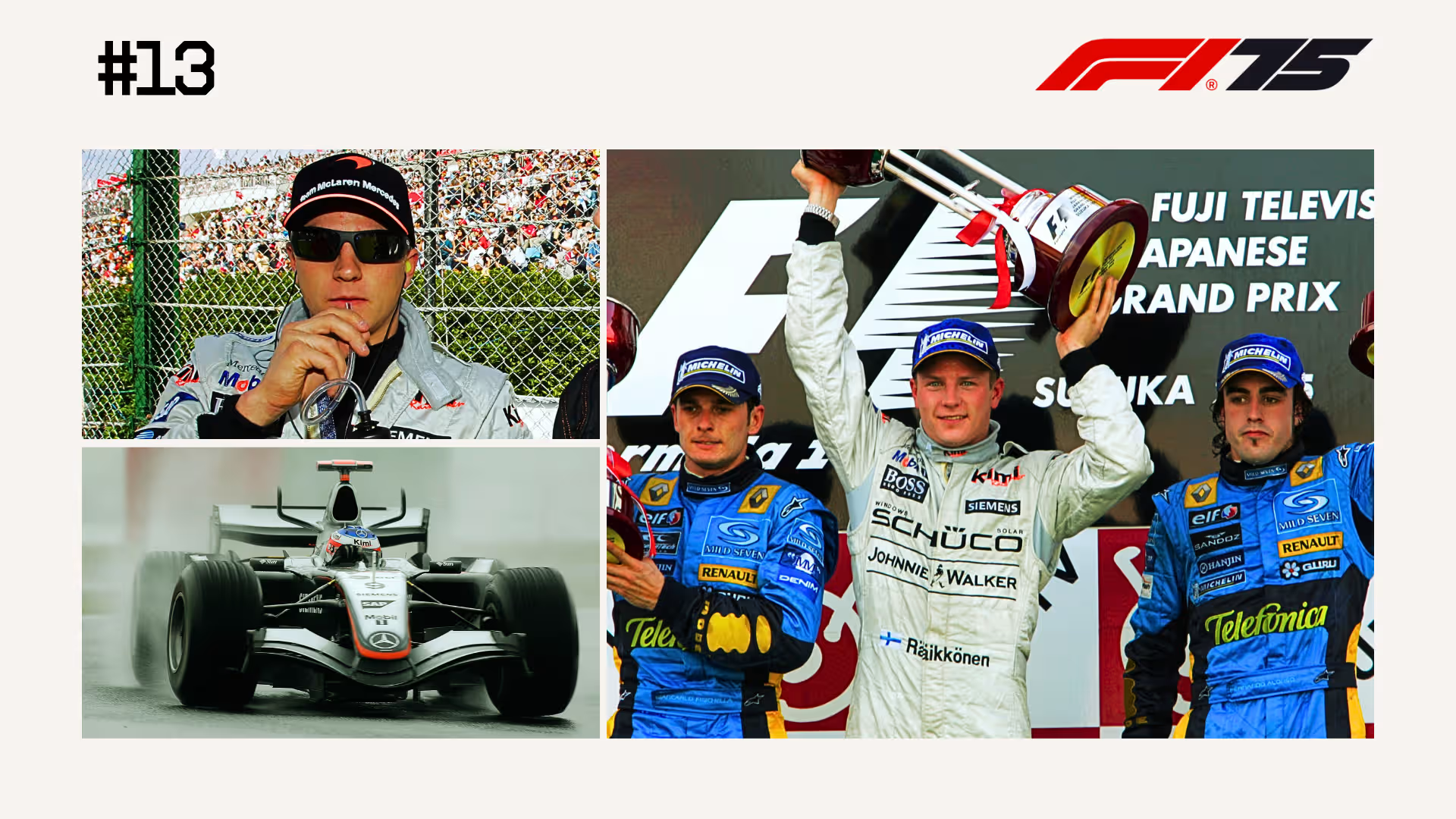
Grand Prix at Suzuka is remembered as one of the most astonishing comebacks in Formula 1 history — and the day Kimi Räikkönen delivered a masterclass that cemented his status as one of the sport’s most gifted drivers. Starting from 17th on the grid and clawing his way through the field to take victory on the final lap, Räikkönen’s drive was a perfect blend of patience, precision, and unrelenting aggression.
Suzuka’s qualifying session was shaped by rain on Saturday, mixing up the grid in dramatic fashion. Heavy downpours meant that many front-running drivers, including Räikkönen and Fernando Alonso, were pushed far down the order. Pole position went to Ralf Schumacher in the Toyota, while McLaren — the fastest car that weekend — had a mountain to climb from deep in the pack.
Räikkönen’s P17 start set the stage for a seemingly impossible task. Yet, those who had followed his career knew that the Finn’s ice-cool temperament often thrived in adversity. The Suzuka crowd, used to legendary racing moments, had no idea they were about to witness one of the greatest charges ever seen in Formula 1.
The race began with Räikkönen and Alonso wasting no time carving through the slower runners. The McLaren-Mercedes, powered by the mighty MP4-20 chassis, had blistering pace, and Kimi was in his element, using every inch of Suzuka’s fast, flowing corners to pick off rivals.
By the midway point, Räikkönen was already inside the top five, but Michael Schumacher, Giancarlo Fisichella, and Jenson Button still stood between him and victory. The strategic battle was heating up too — McLaren’s pit wall took bold calls to optimize his track position, allowing Kimi to keep attacking without losing momentum.
While Räikkönen was charging forward, fans were also treated to a spectacular scrap between Alonso and Michael Schumacher. Alonso’s daring move around the outside of Schumacher at the fearsome 130R corner became an instant classic. The sheer bravery of the pass underlined the kind of fearless racing Suzuka often inspires — and set the tone for Räikkönen’s own decisive moment later.
By lap 50 of 53, Räikkönen had hunted down race leader Giancarlo Fisichella, whose Renault was visibly struggling on worn tires. For several laps, Fisichella defended aggressively, forcing Kimi to search for the perfect moment. The McLaren’s raw speed down the straights and superior traction out of the final chicane gave him the weapon he needed.
On the very last lap, heading into Turn 1, Räikkönen made his move. Pulling out of the slipstream, he surged past the Renault on the outside — a breathtaking and decisive overtake at high speed. The grandstands erupted as the Iceman completed one of the sport’s most extraordinary turnarounds.
The Suzuka victory was Kimi’s seventh and final win of the 2005 season, a year in which he was denied the championship only by reliability issues. Despite losing the title to Alonso, Räikkönen’s Japanese GP drive became the definitive proof of his racecraft and determination.
Years later, the 2005 Japanese Grand Prix is still hailed as one of Formula 1’s “perfect races” — a rare blend of relentless pace, tactical brilliance, and fearless overtaking. For many fans, it encapsulated why Räikkönen remains such a beloved figure in motorsport: no drama, no theatrics — just pure, unfiltered racing excellence.
In his own words after the race, Kimi summed it up in his trademark style:
“The car was fast, I just kept overtaking people until I got to the front. That’s racing.”
Sometimes, the simplest explanation is also the most legendary.