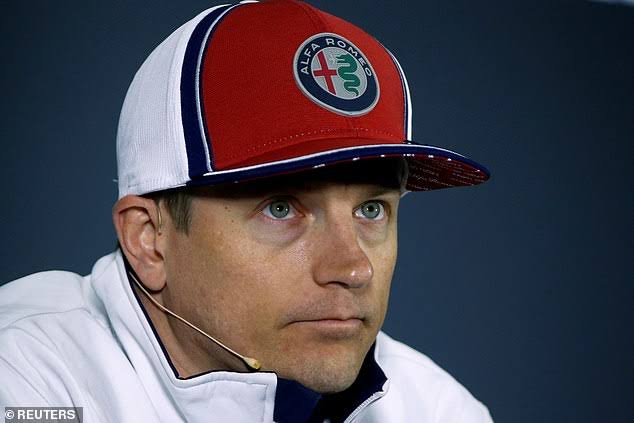

In a rare and candid interview, Kimi Räikkönen, the famously reserved 2007 Formula One World Champion, has opened up about one of the sport’s most controversial and damaging weekends — the 2005 United States Grand Prix at Indianapolis. The Finnish driver, known for his blunt honesty and stoic demeanor, offered a personal take on what he calls “a dark chapter” in F1 history and how the sport has slowly repaired the trust that was nearly lost on that infamous day.
On June 19, 2005, F1 fans witnessed one of the most bizarre and disappointing spectacles in motorsport history. Only six cars took the start of the US Grand Prix after a dramatic fallout between the FIA and teams using Michelin tires. Safety concerns over the Michelin tires’ ability to withstand the high-speed banked corners at Indianapolis led to a standoff. When no compromise could be reached, all Michelin-equipped teams — a total of 14 cars — withdrew after the formation lap.
Räikkönen, who was driving for McLaren-Mercedes at the time and running Michelin tires, was among those forced to pull into the pits before the lights went green. The fallout was immediate: fans booed, broadcasters were outraged, and F1’s image in America took a blow it would take years to recover from.
“We knew it wasn’t going to end well the moment talks fell apart that morning,” Räikkönen recalls. “We wanted to race, we were ready to race — but safety wasn’t guaranteed. It felt like we had betrayed the fans, even if it wasn’t our choice.”
“No One Wanted That Outcome”
While Räikkönen has always maintained a distant relationship with politics in the sport, he emphasized that the 2005 US Grand Prix stood out as a moment where drivers felt powerless.
“No one wanted that outcome. Not the teams, not the drivers. We were caught in the middle. You train all year, sacrifice everything, and then… nothing. The atmosphere was just strange. Angry fans, confused media, and no celebration. It wasn’t F1 anymore — it was chaos.”
Räikkönen, who was in the prime of his career and in the midst of a title battle, described the weekend as “demoralizing,” not only for the competitive implications but for what it revealed about the sport’s internal fractures.
Formula One would eventually return to Indianapolis for two more seasons, but the damage was done. American interest in the sport waned until Liberty Media’s acquisition in 2017 began a new chapter focused on fan engagement, U.S. expansion, and transparency.
“You look at where F1 is now — three races in the U.S., Netflix, sold-out events. It’s like a different world. That didn’t happen overnight,” said Räikkönen. “F1 learned from that day, painfully. Now, they understand that the fans come first.”
Asked whether the sport handled the aftermath properly, Räikkönen said:
“There was blame everywhere — FIA, teams, tire suppliers. In the end, it taught us that communication and unity matter more than ego. You can’t race if you don’t respect each other’s roles.”
Although he rarely revisits the past, the Iceman acknowledged that the 2005 debacle had its place in F1’s journey — a moment of failure that forced the sport to evolve.
“Sometimes, it takes failure to understand what matters. 2005 was that for F1. I just wish the fans didn’t have to pay the price.”
While Räikkönen retired from F1 in 2021, his legacy endures — not only as a world champion and one of the most naturally gifted drivers of his era, but as a figure who, in his own quiet way, represented the purer instincts of racing: show up, do your job, and let your driving speak.
His reflection on Indianapolis is a reminder that even the coolest drivers carry scars from the sport’s mistakes — and that true redemption lies not in erasing the past, but in building something better because of it
.“F1 is better now — more human, more open,” Räikkönen concludes. “But we can’t forget the days when it lost its way.”