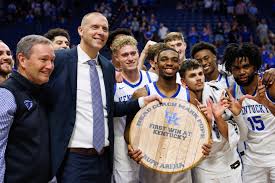
College basketball is facing a critical crossroads. As the sport grows in popularity, it’s also grappling with significant issues, including declining fan interest, increasing player mobility, and a shift in the competitive balance. However, one coach is determined to address these challenges head-on. Mark Pope, the head coach of the Brigham Young University (BYU) men’s basketball team, has laid out a bold plan to revitalize college basketball and restore its former glory.
Pope’s approach centers around a few key principles: improving the player experience, rethinking the role of the transfer portal, and emphasizing the importance of building long-term team stability. With the introduction of the transfer portal and name, image, and likeness (NIL) deals, college basketball has seen unprecedented levels of player movement, which, in many cases, disrupts team chemistry and hampers the development of cohesive programs. Pope believes that while player freedom is important, the growing trend of transferring can create instability and impact the sport’s overall integrity.
One of Pope’s primary goals is to create an environment where players have more incentives to stay at their schools and develop over multiple years. He emphasizes that college basketball should be a place for growth—both on and off the court—rather than just a stepping stone to the pros. Pope believes that players should be encouraged to build strong relationships with their teammates, coaches, and communities, which will lead to better team dynamics and more competitive games.
To address this, Pope proposes changes that would make staying in college basketball more attractive. First, he advocates for programs that offer long-term development opportunities, such as improved coaching and personalized skill development. By investing more resources into player growth and making college programs more appealing to student-athletes, Pope hopes to reduce the constant churn of players jumping from one school to another in search of better opportunities.
Another crucial component of Pope’s plan is the implementation of a more structured approach to NIL deals. He supports the idea of players benefiting from their name, image, and likeness, but he believes that the current landscape needs more regulation. In its present state, NIL has created an uneven playing field, where high-profile players at top-tier programs receive lucrative deals, while others are left with far less. Pope calls for more uniformity and transparency in NIL agreements, ensuring that every player has a fair opportunity to benefit from their hard work.
Finally, Pope envisions a college basketball system that prioritizes player health and well-being, both physically and mentally. The pressure on athletes to perform at a high level has grown significantly, and Pope believes it’s crucial to create a supportive environment that addresses mental health issues and offers players the resources they need to thrive both during and after their college careers.
Pope’s vision for college basketball goes beyond just winning games—it’s about creating a sustainable model that benefits players, coaches, and fans alike. By promoting stability, development, and fairness, Mark Pope hopes to spark a much-needed transformation that will ensure the future of college basketball is bright, competitive, and exciting for years to come. As college basketball grapples with its growing problems, Pope’s plan may just be the key to restoring the sport to its former glory.
Revolutionizing College Basketball: Mark Pope’s Bold Plan to Fix the Sport’s Growing Crisis… Read more
- Trending
- Comments
- Latest